The Full‑Hand CPR Method: A Simple, Memorable Way to Learn Lifesaving Steps
When someone collapses or becomes unresponsive, remembering what to do can feel overwhelming — especially in a high‑stress moment. Mnemonic devices help cut through that panic by giving the brain simple, memorable cues that are easy to recall under pressure.
One of the most powerful tools you always have with you is your hand. Just like the classic knuckle method for remembering the months of the year, we can use the five fingers to remember the five essential steps of CPR — and then use that same hand to begin compressions.
This method is visual, tactile, kinesthetic, and stress‑proof. Perfect for community learners, healthcare providers, and anyone who wants to feel confident in an emergency.
Let’s walk through it.
The Full‑Hand CPR Method ✋
Each finger represents one critical step. When in doubt, look at your hand and walk through the sequence — then put that hand to work.
1. Thumb — Check the Scene for Safety
Your thumb is your “thumbs‑up” safety check.
Before approaching the person, pause and scan the environment:
- Is it safe for you
- Is it safe for the victim
- Are there hazards like traffic, fire, electrical risks, or violence
A safe rescuer is an effective rescuer.
2. Index Finger — Approach and Check Responsiveness
Your index finger is your “point and check” finger.
- Tap the person’s shoulder
- Shout: “Are you okay”
- Look for movement, breathing, or purposeful response
This tells you whether the person needs immediate help.
3. Middle Finger — No Response or Life‑Threatening Emergency: Call 911 & Get an AED
Your middle finger is the tallest — think of it as the “signal for help” if someone is unresponsive:
- Call 911 immediately
- Send someone to get an AED and a first aid kit
- If alone, activate EMS on speakerphone so you can begin care
Early EMS activation and early defibrillation save lives.
4. Ring Finger — If You Are a Healthcare Provider: Check Pulse
Your ring finger symbolizes commitment — and in healthcare, that includes advanced assessment. If you are not a healthcare provider, skip this step, otherwise take these steps:
- Check for a carotid pulse for no more than 10 seconds
- Check for normal breathing at the same time
If there is no pulse, or you’re unsure, begin CPR immediately.
5. Pinky Finger — Begin CPR
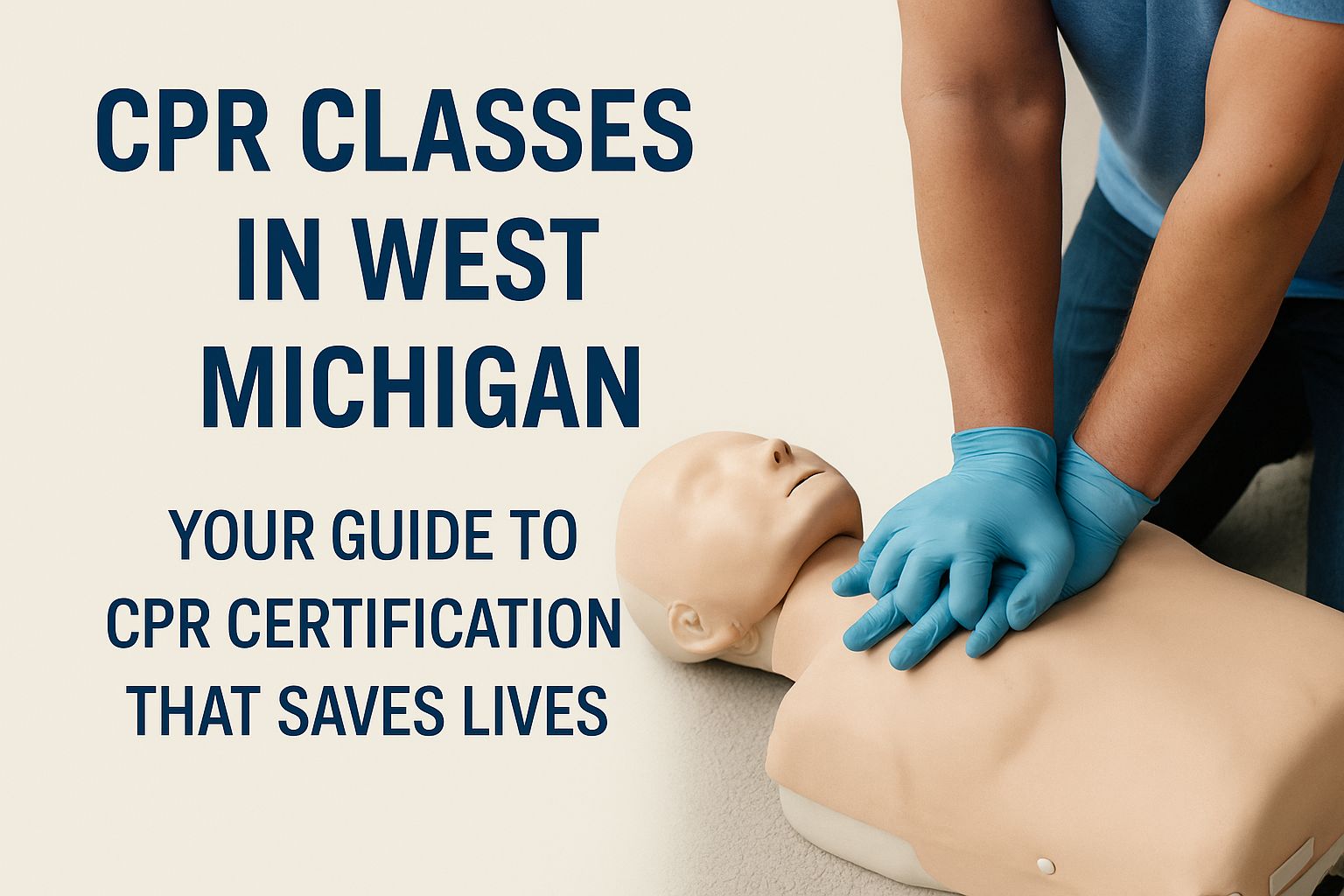
Once you’ve walked through all five fingers, your smallest finger joins in and makes the biggest difference, as your whole hand becomes your action tool. Now place that hand on the center of the chest and begin compressions! ✋➡️❤️
- Push hard and fast in the center of the chest
- Depth: at least 2 inches for adults
- Rate: 100–120 compressions per minute
- Allow full chest recoil
- Minimize interruptions
Continue until help arrives or the person shows signs of life.
❤️ Final Thoughts
This creates a kinesthetic bridge between remembering and doing — a scientifically supported technique that improves recall and reduces hesitation in real emergencies. Your hand becomes both the mnemonic and the lifesaving instrument.
🧠 Why the Full‑Hand Method Works to Help our Brains Remember the Steps
This method taps into multiple memory systems:
- Visual memory – Each finger becomes a visual anchor.
- Kinesthetic memory – Touching each finger reinforces the sequence physically.
- Sequential structure – Your hand naturally moves from thumb to pinky.
- Action integration – Ending with “use this hand to start compressions” creates a powerful mind‑body link.
- Stress‑proof recall – Your hand is always with you — even when adrenaline is high.
The Most Powerful Part!
The Full‑Hand CPR Method is more than a clever teaching tool — it’s a confidence‑building, action‑triggering system that helps anyone respond quickly and effectively when seconds matter.